
The Villanova Equity society invited CEO of Keurig Dr. Pepper to give a presentation on Wednesday morning about his background and how he turned Keurig Dr. Pepper around from a sinking company with great potential to a nationwide variety beverage conglomerate. With over thirty years experience in the food and beverage industry, Gamgort prides himself on rescuing sinking companies. He joined Keurig after some long term business partners based in Europe bought out Keurig in 2016. From January 2014 to November 2015, Keurig Green Mountain’s stock price dropped from $159 to under $40 per share. Gamgort joined KGM in 2016, eager to shake up operations and save the company from failure. Gamgort broke down the business model for us during his presentation. In just one year, Keurig lost almost $400 million on home brewers. Most of their profits came from the sale of their single serve K-cups or “pods.” One of the first changes Gamgort made was to revitalize R&D for brewers and secure more partnerships and licensing agreements for pods. Gamgort set Keurig on a path to releasing a new brewer every six months. One of the most common complaints that Keurig heard was that the coffee brewed from their machines was not hot or strong enough. Up until 2016, most of the brewers in people’s homes were almost ten years old. Gamgort signed off on dozens of new commercials designed to show how “strong” the Keurig coffee was when brewed from one of their new brewers.
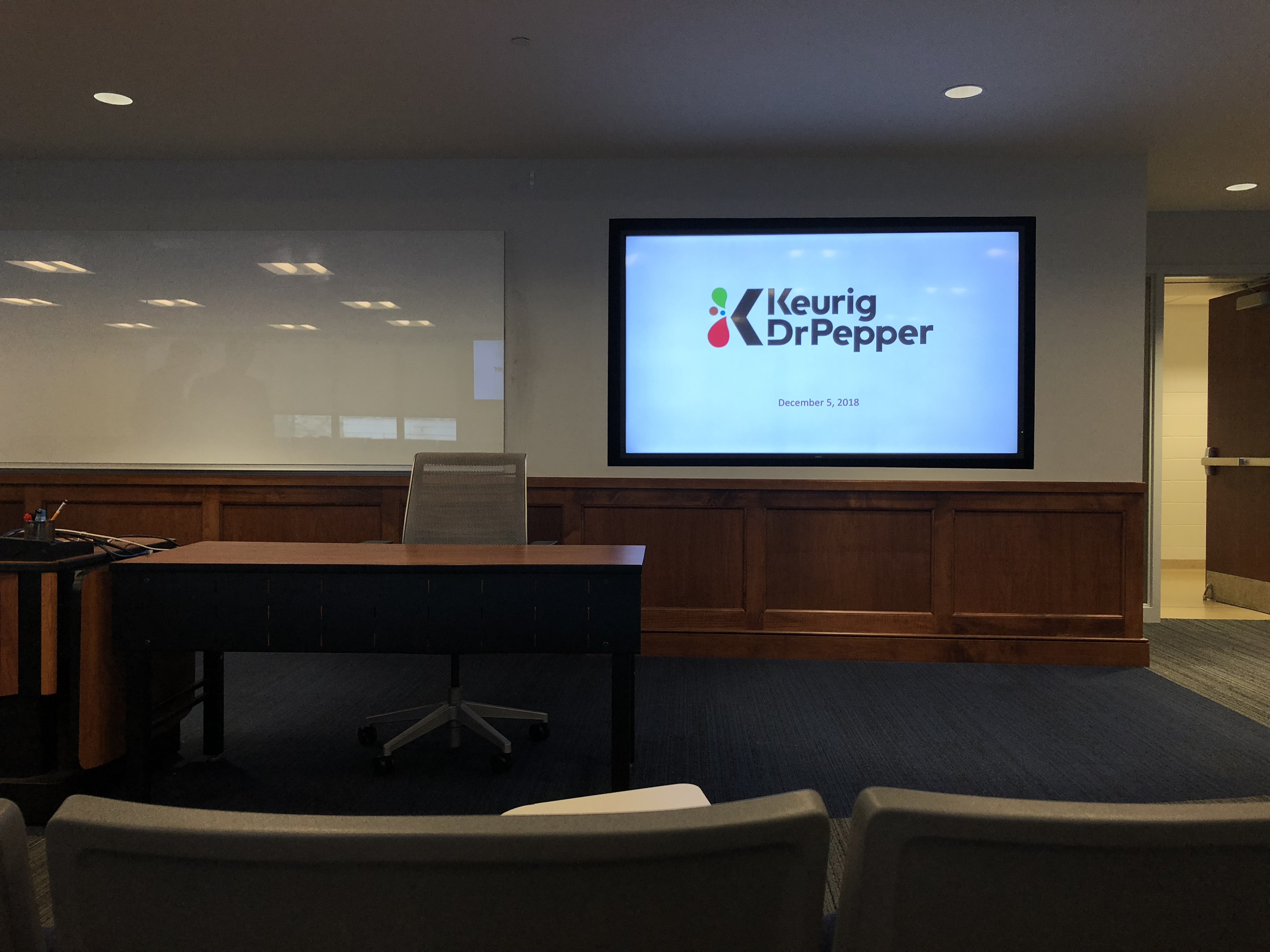
Observing the food and beverage industry trends, Gamgort sought out a way to insulate his company from the pressures of e-commerce and convenience stores. He identified consumers retraction from grocery stores, where the majority of Keurig products are sold and looked for a solution. His vision was to integrate coffee into a larger beverage family, just like any other drink. According to Gamgort, most people view hot beverages like coffee as independent from the rest of the beverage market: he wanted to change this. Gamgort said that during the initial internal merger talks, his team decided that “Coke was too big and Pepsi wasn’t for sale.” That left Dr. Pepper, the third piece of the soft-drink trifecta that accounts for almost 50% of beverage sales in the US. After paying down nearly $3 billion in debt in under two years and more than doubling their enterprise value, KGM pulled the trigger. In July of 2018, Keurig Green Mountain merged with Dr. Pepper, causing much confusion in the business world. Not a single analyst understood the long-term benefits of this play and most thought that Gamgort had lost his marbles. Gamgort explained to us, just as he did on CNBC that morning, that this merger created a company with a nationwide distribution network, giving Keurig the capability to supply their major partners better. The deal also offered increased capital and productions solutions that helped reduce costs for many vital partners for both companies.
Gamgort’s explanation of his solution methods and ultimate vision was very impactful. Throughout the entire presentation, he answered questions from the audience and made sure to keep us engaged. Gamgort’s strategized and educated risk turned Keurig a fighting chance and created a new company that will allow smaller partners to expand their businesses and introduce their products to new markets.

 Nick's Business Blog